



Feature Sizes for Coverlay and Soldermask in High-Density Flex PCBs By Zachary Walker, Product Manager Flex & Rigid-Flex Epec Engineered Technologies
High-density flexible PCBs can be difficult to plan and layout, given that footprints are tiny and openings can be incredibly small. Already, trace layouts, via placements, pad requirements, and many other things are difficult, but then adding on coverlay openings can make it that much worse to plan for.
In this article, we will discuss the various requirements of coverlays and when soldermask may end up being the better option for a high-density flex PCB.
Understanding Coverlay in Flex PCB Construction
Coverlay is the traditional protective layer used in flexible circuits. It is typically made from a polyimide film that is laminated to the copper circuitry using a thermoset adhesive. During fabrication, the coverlay protects copper traces while leaving carefully defined openings for component pads and test points.
Unlike soldermask used on rigid PCBs, coverlay is not applied as a liquid coating. Instead, it is physically laminated onto the circuit during a press cycle. Because of this, the design of coverlay openings must account for mechanical cutting methods, adhesive flow, and lamination alignment.
Openings in coverlay (Figure 1) can be created in two primary ways. The first method uses mechanical punching or routing before lamination. This is the most common and reliable approach. Mechanical tooling creates openings in the polyimide film before the coverlay is laminated to the circuit. Due to tooling constraints and material stability, these openings typically require a minimum web width of approximately 0.020 inches between adjacent openings.
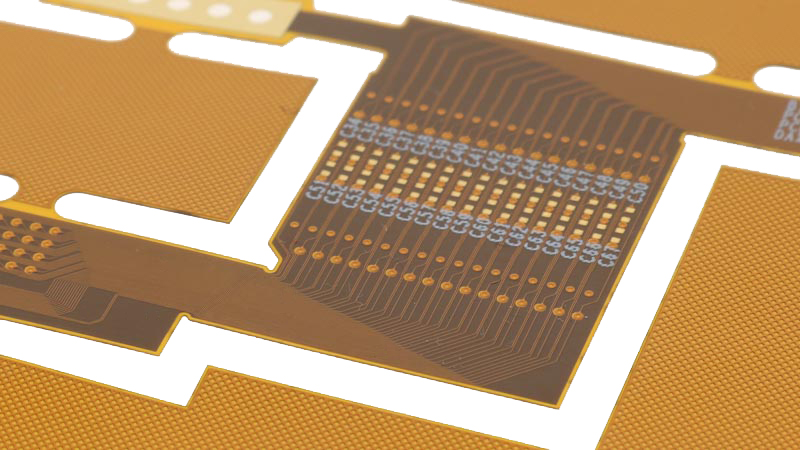 Figure 1: High-density flexible circuit with showing openings in coverlay.
Laser processing is the second option and can produce finer features than mechanical methods. Laser ablation allows for smaller openings and tighter spacing, which can be attractive in high-density designs. However, laser cutting may introduce charring or darkened edges along the polyimide material where the laser interacts with the film. These cosmetic and material effects can be undesirable in many applications. Because of this, laser-defined coverlay openings are usually recommended only when mechanical methods cannot meet the design requirements.
Another important factor in coverlay design is adhesive thickness. The adhesive layer between the polyimide film and the copper circuitry must accommodate the topography of the copper features. As copper weight increases, the adhesive thickness must also increase to ensure proper lamination and coverage. Thicker adhesives can slightly reduce feature definition, which should be considered when working with dense layouts.
Adhesive Types Used in Coverlay
The adhesive system used in coverlay construction also plays a role in performance and processing. Three primary adhesive types are commonly used.
- Acrylic adhesives are the most common and generally have the lowest temperature resistance. They are widely used because of their flexibility and relatively forgiving lamination behavior.
- Epoxy adhesives provide higher temperature resistance and improved dimensional stability. Many manufacturers consider epoxy systems the practical upper limit for temperature capability in standard coverlay constructions.
- Polyimide adhesives exist as well, but they are less common. These systems typically require lamination procedures beyond standard manufacturing processes and are therefore used in more specialized applications.
Coverlay Feature Size Guidelines
For high-density flex circuits, understanding the minimum achievable feature sizes is critical.
Typical fabrication guidelines include:
- Minimum round opening diameter of approximately 0.006 inches
- Minimum square opening size of approximately 0.012 inches
- Pad opening clearances are generally defined at least 0.003 inches larger than the pad itself
These allowances ensure that the laminated coverlay aligns correctly and does not encroach on solderable surfaces during assembly.
From an aesthetic and practical standpoint, coverlay is typically available in a limited color range. The most common colors are amber, white, and black (Figure 2), with amber polyimide being the traditional choice in many flexible circuit designs.
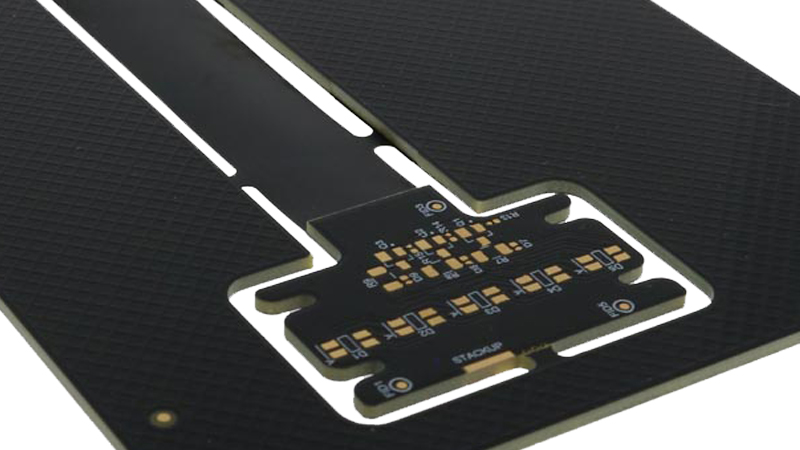 Figure 2: Rigid-flex PCB with black coverlays on the flexible sections.
Using Soldermask on Flexible Circuits
Soldermask is widely used on rigid PCBs but can also be applied to flexible circuits using specially formulated materials and processing steps. Unlike coverlay, soldermask is applied as a liquid coating that is selectively hardened through exposure to ultraviolet light.
After the soldermask is coated onto the circuit surface, light exposure polymerizes the desired areas. The remaining unexposed material is then chemically developed away, leaving openings where pads and features must remain exposed.
Because this process relies on optical imaging rather than mechanical tooling, soldermask can support finer geometries than traditional coverlay. In high-density designs, this can be a significant advantage.
One of the key benefits of soldermask is the ability to produce thinner webs between openings. In many manufacturing environments, soldermask can achieve web widths as small as 0.004 inches, which is far tighter than the typical mechanical limits of coverlay.
Pad clearance requirements are also smaller. Designers typically allow about 0.002 inches of clearance per side when defining soldermask openings around component pads.
Soldermask also offers greater flexibility in appearance. While coverlay is limited to a small set of colors, soldermask is commonly available in a wide range of colors including green, red, black, white, blue, yellow, orange, purple, and others. While color is rarely a primary design factor in high-density electronics, it can occasionally be useful for identification or product branding.
The primary drawback of soldermask in flexible circuits is durability during repeated flexing. Coverlay remains the preferred protective layer for dynamic flex regions because it provides superior mechanical protection and longer fatigue life. Soldermask tends to have a shorter lifetime when subjected to continuous bending.
Comparing Coverlay and Soldermask in High-Density Designs
Both coverlay and soldermask serve important roles in flexible circuit construction, but they behave differently and offer different advantages.
Coverlay is mechanically robust and well-suited for areas of the circuit that will experience bending or mechanical stress. Its laminated construction protects copper traces effectively and provides excellent long-term reliability.
However, coverlay is more limited when it comes to fine feature definition. Mechanical tooling constraints and adhesive flow limit how tightly openings can be spaced.
Soldermask, on the other hand, provides superior resolution and can support tighter spacing between pads and features. This makes it attractive in component-dense areas where routing density is high, and pad spacing is minimal.
For this reason, many advanced flexible circuits use a hybrid approach (Figure 3). Soldermask may be used around fine-pitch components and dense routing areas, while coverlay protects the remainder of the circuit where durability and flexibility are more important.
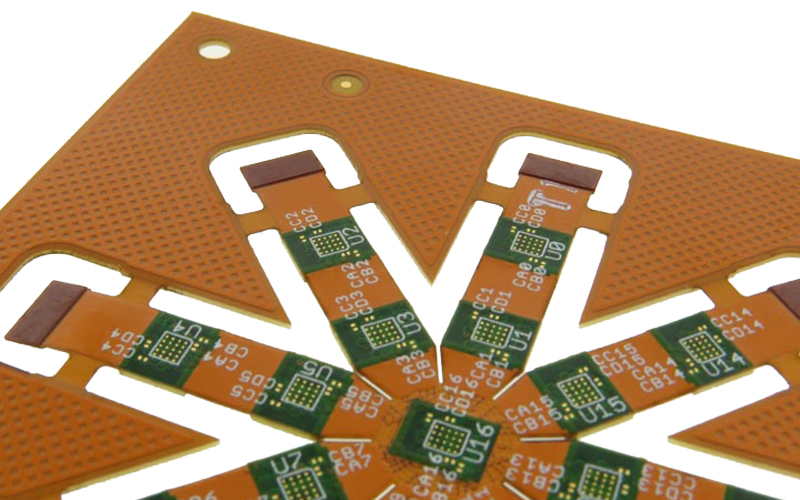 Figure 3: Hybrid flexible circuit using green soldermask and coverlays.
Both materials can also be used creatively in copper-heavy areas. In some designs, pad openings may be grouped together to form larger exposed copper regions, or carefully shaped openings can create solder dams that help control solder flow during assembly.
Summary
Soldermask and coverlay are vital parts of a flexible circuit board, providing fine detail and coverage. While many tend to forget, the key attributes of the openings will always need to be considered, or else you may fall into the trap of needing redesigns just to make a design manufacturable.
When creating flexible PCBs, it is always best to include your manufacturer from the start and verify the design, including things such as soldermask and coverlay openings. It is always best to design with capability in mind to avoid incurring unnecessary costs.
Working with Tight Geometries in Flex PCB Designs?
Designing high-density flex circuits require careful attention to manufacturing capabilities. If you need help optimizing your design, our engineering team is ready to assist to ensure your flex circuit is optimized for manufacturability from the start.
Request a Quote Request Design Support