



Lithium Battery Technologies
Epec Engineered Technologies leverages experienced engineering, design, quality, and manufacturing teams to deliver technically advanced lithium battery solutions. We specialize in both rechargeable and non-rechargeable lithium cells and battery packs, supporting a wide range of lithium chemistries.
This breadth allows Epec to tailor battery pack designs to the specific electrical, mechanical, and environmental requirements of each application, including demanding use cases across global markets.
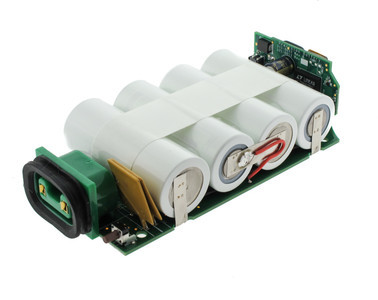
At a Glance: Lithium Battery Technologies
- Designs and manufactures lithium battery pack systems using multiple lithium chemistries to meet demanding application requirements.
- Lithium battery technologies provide advantages in energy density, reduced weight, reliability, and long service life for both rechargeable and non-rechargeable systems.
- Delivers turnkey lithium battery solutions by integrating cells, protection circuitry, and monitoring electronics into custom battery packs.
Lithium-ion, Lithium Polymer and Lithium Iron Phosphate
Epec’s manufacturing capabilities range from basic battery packs to highly customized assemblies with specialized circuitry, connectors, and housings. These solutions can be produced in low to high volumes and are supported by inhouse design, development, testing, and manufacturing expertise.
When a Lithium Power Source Is the Right Choice
A lithium power source offers significant advantages when an application requires high voltage, low weight, and long operational life. Lithium technologies are well-suited for designs that demand high energy density, long shelf life, and reliable performance in challenging environmental conditions such as temperature extremes, vibration, or shock. They are also appropriate when continuous power delivery over extended periods is required or when recharging circuitry is unavailable or cost-prohibitive.
Lithium battery pack systems provide higher capacity per unit weight than other battery chemistries, making them especially attractive for compact or weight-sensitive applications.
Lithium Batteries Overview
Lithium provides the highest capacity, measured in ampere-hours, per unit weight of all metals, making it an ideal anode material. As a result, lithium battery pack systems offer distinct advantages over other battery systems, particularly in terms of long life, reliability, and capacity for continuous power delivery.
Epec partners with leading lithium cell manufacturers to provide optimized solutions and integrates advanced control and monitoring electronics into its battery packs. These turnkey solutions are developed based on customer requirements and specifications.
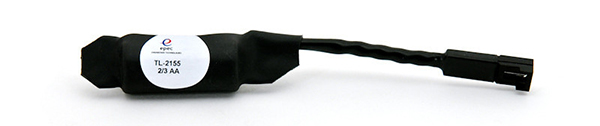 Primary Lithium Battery Pack for Conversion Tracking Device
Lithium-Ion Batteries
Lithium-ion batteries are rechargeable systems in which lithium ions move between the anode and cathode during discharge and charge cycles. They are widely used in portable consumer electronics due to their high energy-to-weight ratio, lack of memory effect, and slow self-discharge when not in use.
A lithium-ion battery consists of three primary components: the anode, cathode, and electrolyte. The most common anode material is graphite, while cathode materials vary and can significantly influence voltage, capacity, cycle life, and safety characteristics.
 Lithium-Ion Battery Pack for GPS Tracking Device
Lithium Polymer (LiPo)
Lithium-ion polymer batteries, also referred to as lithium polymer or polymer lithium-ion batteries, are rechargeable secondary cells. These batteries are often composed of multiple identical cells connected in parallel to increase discharge current capability. Lithium polymer battery packs are commonly used in applications requiring flexible form factors and reliable rechargeable performance.
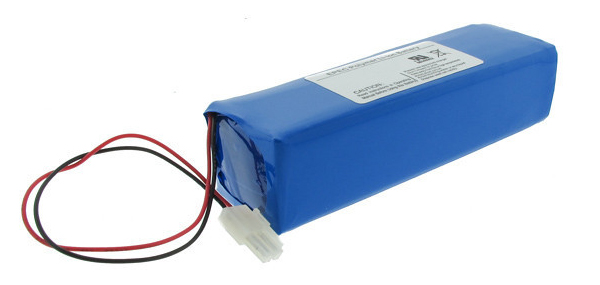 Lithium Polymer Battery Pack for Medical Application
Lithium Iron Phosphate (LiFePO4)
Lithium iron phosphate technology offers enhanced thermal and chemical stability compared to other lithium-ion chemistries. Phosphate-based cells provide improved safety characteristics, as they are incombustible during mishandling in charge or discharge conditions and are more stable under overcharge or short-circuit scenarios.
LiFePO4 cells can withstand high temperatures without decomposing and are not prone to thermal runaway. In cases of abuse, the phosphate cathode material does not burn, and this chemistry also provides a longer cycle life compared to many other lithium-ion options.
Protection and Control in Lithium Battery Packs
Lithium-ion and lithium polymer battery packs should always be used with appropriate protection circuits to prevent overcharging and overdischarging. Selecting and applying the correct protection circuitry is critical to battery longevity and user safety. Epec develops and integrates sophisticated control and monitoring electronics into its lithium battery packs to support safe and reliable operation.
Lithium-Ion Cathode Chemistry Comparison
Different cathode materials result in meaningful tradeoffs between voltage, energy density, and thermal stability. The table below summarizes typical characteristics of common lithium-ion cathode chemistries used with carbon anodes.
| Cathode Material | Typical Voltage | Value | Units |
|---|---|---|---|
| Cobalt Oxide | Voltage | 3.7 | V |
| Cobalt Oxide | Gravimetric Energy Density | 195 | Wh/kg |
| Cobalt Oxide | Volumetric Energy Density | 560 | Wh/L |
| Nickel Cobalt Aluminum Oxide (NCA) | Voltage | 3.6 | V |
| NCA | Gravimetric Energy Density | 220 | Wh/kg |
| NCA | Volumetric Energy Density | 600 | Wh/L |
| Nickel Cobalt Manganese Oxide (NCM) | Voltage | 3.6 | V |
| NCM | Gravimetric Energy Density | 205 | Wh/kg |
| NCM | Volumetric Energy Density | 580 | Wh/L |
| Manganese Oxide (Spinel) | Voltage | 3.9 | V |
| Spinel | Gravimetric Energy Density | 150 | Wh/kg |
| Spinel | Volumetric Energy Density | 420 | Wh/L |
| Iron Phosphate (LFP) | Voltage | 3.2 | V |
| LFP | Gravimetric Energy Density | 90–130 | Wh/kg |
| LFP | Volumetric Energy Density | 333 | Wh/L |
Additional Resources:
- Lithium Prismatic Cells - High Energy Density with Long Life Cycles
- Lithium Batteries: Cylindrical Versus Prismatic
- Custom Lithium Battery Packs - Primary and Secondary Lithium Batteries
- Lithium Battery Packs: Choosing the Protection Board Best for You
- Lithium Iron Phosphate Vs. Lithium-Ion: Differences and Advantages
- Lithium-Ion vs Lithium Iron Phosphate: What Markets They Support
- How To Maximize Lithium-Ion Battery Life
- Lithium Battery Storage
- Why are Lithium Batteries so Expensive to Manufacture?
- Common Failures in Lithium Battery Packs
Frequently Asked Questions
Quick Links
- What lithium battery chemistries does Epec support?
- Why are lithium batteries lighter than other battery types?
- Do lithium battery packs require protection circuits?
- What makes lithium-ion batteries suitable for portable electronics?
- How does lithium iron phosphate improve safety?
- Can Epec design fully custom lithium battery packs?
- How does cathode chemistry affect battery performance?
What lithium battery chemistries does Epec support?
Epec supports lithium-ion, lithium polymer, lithium iron phosphate, and other lithium chemistries for both rechargeable and non-rechargeable battery pack designs.
Why are lithium batteries lighter than other battery types?
Lithium provides the highest capacity per unit weight of all metals, allowing lithium battery packs to achieve high energy density with reduced weight.
Do lithium battery packs require protection circuits?
Yes. Lithium-ion and lithium-polymer battery packs should always include protection circuits to prevent overcharging and overdischarging and to ensure safety and longevity.
What makes lithium-ion batteries suitable for portable electronics?
Lithium-ion batteries offer high energy-to-weight ratios, no memory effect, and slow self-discharge when not in use.
How does lithium iron phosphate improve safety?
LiFePO4 chemistry provides superior thermal and chemical stability, is resistant to thermal runaway, and does not burn when subjected to abuse conditions.
Can Epec design fully custom lithium battery packs?
Yes. Epec designs, develops, tests, and manufactures custom lithium battery packs with specialized circuitry, connectors, and housings based on customer requirements.
How does cathode chemistry affect battery performance?
The choice of cathode material directly impacts voltage, capacity, cycle life, and safety characteristics of a lithium-ion battery.
Energy Storage Solutions Provider
Epec manufactures advanced lithium battery products that combine precision engineering with extensive application expertise. The company supports customers throughout the full product lifecycle, helping integrate energy storage solutions from initial concept through commercialization.
Epec’s proven lithium battery technologies enable reliable, application-specific power solutions. Let us engineer your next power solution. Contact us to talk with a member of our engineering team.
Request a Quote Request Design Support Request More Information
Request a FREE Quote!
We are here to help you will all your custom battery pack needs.
Get Your Quote Now! Not Ready for a Quote? Request more info or email us your inquiry.Ebook - Using Lithium Cells in Custom Battery Packs
 Download Your Copy
...or Download Our Custom Battery Pack Design Guide