



Custom Alkaline Battery Packs
Custom alkaline battery packs provide a high energy density, long shelf life, and low-cost power solution for a wide range of applications, including portable devices, remote monitoring systems, and emergency equipment. Epec Engineered Technologies designs and manufactures custom alkaline battery packs with application-specific considerations for voltage, capacity, operating temperature, safety, and environmental protection. With in-house engineering and manufacturing resources, Epec supports projects from prototype through production for customers across military, aerospace, medical, and industrial industries.
Epec Engineered Technologies has provided custom battery solutions for more than a decade, with extensive experience in the design, engineering, and manufacturing of complex alkaline battery packs. The company develops custom alkaline battery solutions tailored to the specific performance, safety, and environmental requirements of each application.
Alkaline batteries remain a widely used option for custom battery packs because they combine high energy density, long shelf life, low cost, and stable operation across a broad operating temperature range. These characteristics make alkaline battery packs suitable for portable devices and many low-to-medium power applications.
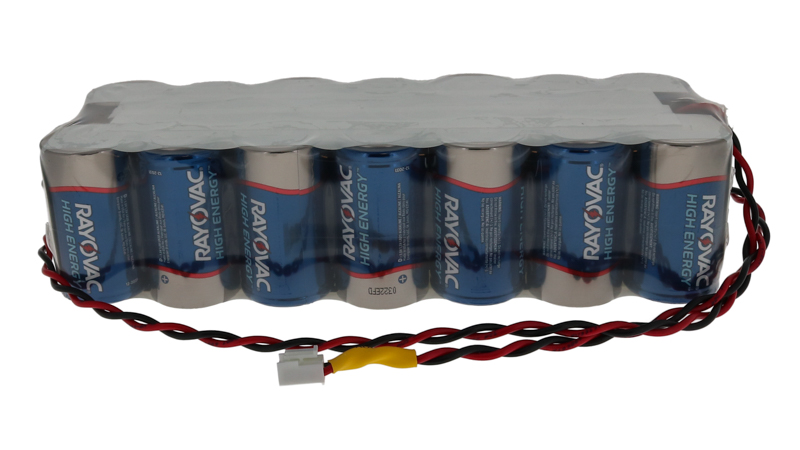
At a Glance: Custom Alkaline Battery Packs
- Custom alkaline battery packs provide a high energy density, long shelf life, and low-cost power solution for portable devices, remote monitoring systems, and emergency equipment.
- Epec designs alkaline battery packs around application-specific voltage, capacity, operating temperature, safety, and environmental protection requirements, including potting and enclosure considerations.
- With in-house engineering and manufacturing resources, Epec supports custom alkaline battery pack projects from prototype through production for military, aerospace, medical, and industrial applications.
Why Choose Alkaline Batteries for Your Application?
Alkaline batteries are commonly selected for custom battery packs because they provide a balance of energy density, cost-effectiveness, reliability, and environmental stability. They are designed as primary batteries, meaning they are intended for one-time use and are replaced once depleted.
High Energy Density
Alkaline batteries provide high energy density, allowing a large amount of energy to be stored within a relatively small package. This makes them a practical choice for applications that require compact power sources, including portable electronic devices where space and weight are important considerations.
Long Shelf Life
Alkaline batteries offer a long shelf life and can remain in storage for several years before replacement is required. This makes them well suited for applications that require long service life and dependable standby power, such as remote monitoring systems and emergency equipment.
Low Cost
Compared to many other battery chemistries, alkaline batteries are relatively inexpensive. Their lower cost makes them a cost-effective solution for applications requiring large battery quantities or economical power sources.
Wide Temperature Range
Alkaline batteries can operate across a wide temperature range from -20°C to 55°C. This operating range supports use in a variety of environmental conditions and application environments.
Non-Toxic
Alkaline batteries are considered non-toxic and can typically be disposed of safely in most municipal waste streams. Compared to chemistries such as lithium-ion batteries, alkaline batteries can provide an environmentally friendly battery option for certain applications.
See our blog post on using alkaline batteries in your application for more information.
Alkaline Battery Pack Design
Designing a custom alkaline battery pack requires consideration of multiple electrical, thermal, and environmental factors.
Key design considerations include:
- Voltage requirements
- Capacity requirements
- Operating temperature range
- Application-specific environmental conditions
- Safety and reliability requirements
Alkaline batteries are known for their high energy density, low cost, and long shelf life, making them attractive for many applications. Because alkaline batteries are primary batteries, they are designed for single-use operation and cannot be recharged.
Alkaline battery packs are designed to provide a stable and reliable source of power for low-to-medium power applications. Battery pack configurations must be carefully developed to ensure the final design meets the specific operational requirements of the application.
Safety Features
Safety fuses are not typically required for alkaline battery packs because alkaline battery chemistry is generally safe and stable. These batteries are designed with features intended to help prevent overcharging and short-circuiting, reducing the risk of fire or explosion.
Even with the inherent stability of alkaline batteries, battery packs must still be designed and manufactured to meet application-specific safety requirements. High-risk environments or critical system applications may require additional protective measures including:
- Fuses
- Circuit breakers
- Redundant safety features
Potting
Alkaline battery packs are frequently potted using protective resin or polymer materials to improve durability, insulation, and environmental protection. Potting helps protect battery packs against:
- Physical damage
- Moisture exposure
- Vibration
- Environmental conditions that may affect performance or reliability
Potting can also improve thermal management by helping dissipate heat generated during operation. This is especially important in high-power or high-drain applications where additional heat may be generated during battery use.
The potting material must be selected carefully to ensure compatibility with the battery chemistry and application requirements. Potting materials are required to be electrically insulating, thermally conductive, chemically inert, and resistant to the operating temperature range of the battery pack.
Common potting materials used in battery packs include:
- Epoxy
- Silicone
- Urethane
Enclosures
Enclosures for alkaline battery packs can be manufactured using a range of materials depending on the application requirements and design constraints. Material selection depends on factors that include:
- Environmental conditions
- Weight considerations
- Cost requirements
- Manufacturing processes
- Safety requirements
- Reliability expectations
The enclosure must provide sufficient protection for the battery pack while supporting the required performance and operational demands of the application.
Experience in Design and Manufacturing
Epec Engineered Technologies has years of experience designing and manufacturing custom alkaline battery packs for military, aerospace, medical, industrial, and other applications. The engineering team understands the unique design challenges associated with different industries and develops battery packs to address specific customer requirements.
Battery packs undergo rigorous testing to support performance and reliability requirements. Epec’s ISO 9001:2015 certification reflects a quality management system with regularly audited processes designed to maintain high manufacturing and quality standards.
Because Epec maintains in-house battery pack design, engineering, and manufacturing resources, the company can efficiently move projects from prototype through production. Battery packs can be developed in a wide range of sizes, shapes, and configurations for both small and large production runs.
Epec works closely with customers throughout the full development process, from initial design through final delivery.
Frequently Asked Questions
Quick Links
- Why are alkaline batteries commonly used in custom battery packs?
- Are alkaline batteries rechargeable?
- What applications are alkaline battery packs used for?
- What operating temperature range can alkaline batteries support?
- Why is potting used in alkaline battery packs?
- What materials are commonly used for battery pack potting?
- What industries does Epec support with custom alkaline battery packs?
Why are alkaline batteries commonly used in custom battery packs?
Alkaline batteries are commonly used because they provide high energy density, long shelf life, low cost, and reliable operation across a wide temperature range.
Are alkaline batteries rechargeable?
No. Alkaline batteries are primary batteries designed for one-time use and must be replaced once their energy is depleted.
What applications are alkaline battery packs used for?
Alkaline battery packs are used in portable electronic devices, remote monitoring systems, emergency equipment, and other low-to-medium power applications.
What operating temperature range can alkaline batteries support?
Alkaline batteries can operate within a temperature range of -20°C to 55°C.
Why is potting used in alkaline battery packs?
Potting is used to improve durability, insulation, moisture resistance, vibration protection, and thermal management within the battery pack.
What materials are commonly used for battery pack potting?
Common potting materials include epoxy, silicone, and urethane.
What industries does Epec support with custom alkaline battery packs?
Epec develops alkaline battery packs for customers in military, aerospace, medical, industrial, and related industries.
Request a Quote Request Design Support Request More Information
Request a FREE Quote!
We are here to help you will all your custom battery pack needs.
Get Your Quote Now! Not Ready for a Quote? Request more info or email us your inquiry.Ebook - BMS Design Guide for Custom Battery Packs
 Download Your Copy
...or Download Our Custom Battery Pack Design Guide