



Battery Charger Design
Customized Battery Charging Solutions
In order to provide our customers with a full power management solution we have the experience and expertise to develop and configure a battery charger that fits your needs.
Proper charging of a battery pack is essential to ensure safe and optimal operation of portable electronic devices. By optimizing both the battery pack and charger during the design phase, manufacturers can take into account all relevant considerations for their portable power source, including charge rate, accurate determination of full charge and charge termination.
At a Glance: Battery Charger Design
- Custom battery charger solutions are designed to optimize charging performance, safety, and battery life for specific battery pack requirements.
- Supports a wide range of rechargeable battery chemistries, including SLA, NiCd, NiMH, lithium-ion, and lithium metal technologies.
- Available as internal or external charger configurations with custom and off-the-shelf options to meet application-specific needs.
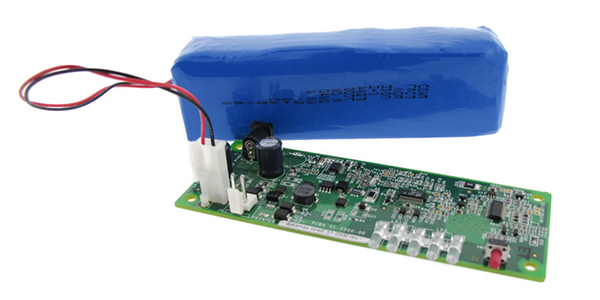
We have extensive experience offering customers customized charging solutions, utilizing products from Texas Instruments, Microchip, Analog Devices, Seiko and others that significantly improve the battery charging dynamics. It provides greater efficiency and reduced charging time while improving battery cycle life.
Battery Charger Capabilities
From internal battery chargers, to our extensive array of off the shelf solutions and custom external chargers, our engineering team will work with you configure a battery charger to meet the specific and unique requirements of your battery pack.
- Rapidly configured to your exact requirements
- Compliant with UL, CSA and CE standards
- Domestic and Asia Manufacturing
- Proven solutions for SLA, NiCd, NiMH, Li-Ion, Li Metal
- Custom and off-the shelf solutions
For more information, see our blog post on ensuring a proper battery and charger match.
Rechargeable Battery Technologies
| Nickel Cadmium | Nickel Metal Hydride | Lithium Ion | Lithium Metal | |
|---|---|---|---|---|
| Average Cell Voltage (V) | 1.20 | 1.25 | 3.6 | 3.0 |
| Energy Density (Wh/kg) | 45 | 55 | 100 | 140 |
| Energy Density (Wh/l) | 150 | 180 | 225 | 300 |
| Cost ($/Wh) | 0.75 - 1.5 | 1.5 - 3.0 | 2.5 - 3.5 | 1.4 - 3.0 |
| Memory Effect? | Yes | No | No | No |
| Self-Discharge (%/month) | 25 | 20-25 | 8 | 1-2 |
| Discharge Rate | >10C | <3C | <2C | <2C |
| Charge/Discharge Cycles | 1000 | 800 | 1000 | 1000 |
| Temperature Range (°C) | –10 to +50 | –10 to +50 | –10 to +50 | –30 to +55 |
| Environmental Concerns | Yes | No | No | No |
For more information, see our blog post on battery charging and discharging at high and low temperatures.
Frequently Asked Questions
Quick Links
- Why is battery charger design important?
- Can a charger be customized for a specific battery pack?
- What battery chemistries can custom chargers support?
- What factors affect battery charging performance?
- Are custom battery chargers available as internal and external designs?
Why is battery charger design important?
Battery charger design plays a critical role in the safety, performance, and longevity of a battery-powered device. A properly designed charger ensures that the battery receives the correct charging current and voltage throughout the charging cycle. It also provides accurate charge termination to prevent overcharging, which can reduce battery life and impact safety. Optimizing both the battery pack and charger together helps ensure reliable system performance and efficient energy management.
Can a charger be customized for a specific battery pack?
Yes, custom battery chargers can be configured to match the unique electrical and operational requirements of a battery pack. Factors such as battery chemistry, capacity, charging rate, environmental conditions, and application demands are considered during the design process. Customization allows manufacturers to improve charging efficiency while supporting the specific performance goals of the end product. This approach helps ensure compatibility between the battery and charger throughout the product lifecycle.
What battery chemistries can custom chargers support?
Custom charging solutions can be developed for a variety of rechargeable battery technologies, including sealed lead acid (SLA), nickel cadmium (NiCd), nickel metal hydride (NiMH), lithium-ion, and lithium metal batteries. Each chemistry has unique charging characteristics, voltage requirements, and termination methods that must be properly managed. A charger designed specifically for the intended battery chemistry helps maximize performance and maintain safe operation. Matching the charger to the battery technology is essential for achieving optimal results.
What factors affect battery charging performance?
Several factors influence charging performance, including battery chemistry, charge rate, temperature, battery condition, and charger design. Charging too quickly or operating outside recommended temperature ranges can negatively affect battery life and efficiency. Accurate monitoring and control of charging parameters help ensure the battery reaches full charge safely. An optimized charging strategy can also reduce charging time while helping preserve long-term battery capacity.
Are custom battery chargers available as internal and external designs?
Yes, custom charging solutions can be implemented as either internal chargers integrated into the device or external standalone charging units. The configuration depends on the application's power requirements, available space, user interface considerations, and overall system architecture. External chargers may provide flexibility for charging multiple devices, while internal chargers can simplify operation for end users. Both approaches can be engineered to support specific battery technologies and performance requirements.
Enhance Your Battery Charging Solutions
Unlock the potential of your portable electronic devices with customized battery charging solutions tailored to your specific needs.
Request a Quote Request Design Support Request More InformationRequest a FREE Quote!
We are here to help you will all your custom battery pack needs.
Get Your Quote Now! Not Ready for a Quote? Request more info or email us your inquiry.Ebook - BMS Design Guide for Custom Battery Packs
 Download Your Copy
 ...or Download Our Custom Battery Pack Design Guide