



Custom Lithium Battery Packs
Custom lithium battery packs combine primary and secondary lithium battery technologies to support a wide range of applications, including medical devices, military applications, industrial equipment, portable devices, and consumer electronics. Epec Engineered Technologies develops custom battery packs with integrated safety features such as overcurrent protection, overcharge protection, thermal management systems, and advanced battery management systems (BMS) to support safe and reliable operation. With both offshore and domestic production capabilities, Epec provides custom lithium battery solutions designed around application-specific voltage, current, energy density, and size requirements.
Epec Engineered Technologies is a premier source for custom lithium battery packs, providing both primary and secondary lithium battery solutions for customers across multiple industries. With extensive experience in battery pack development, Epec supports applications ranging from consumer electronics and portable devices to medical devices, industrial equipment, military and aerospace applications.
As demand for lithium battery technology continues to grow, the need for reliable, high-quality custom battery packs also increases. Epec has many years of experience in the battery industry and delivers battery solutions designed to meet unique application requirements while maintaining safety, reliability, and long-term performance.
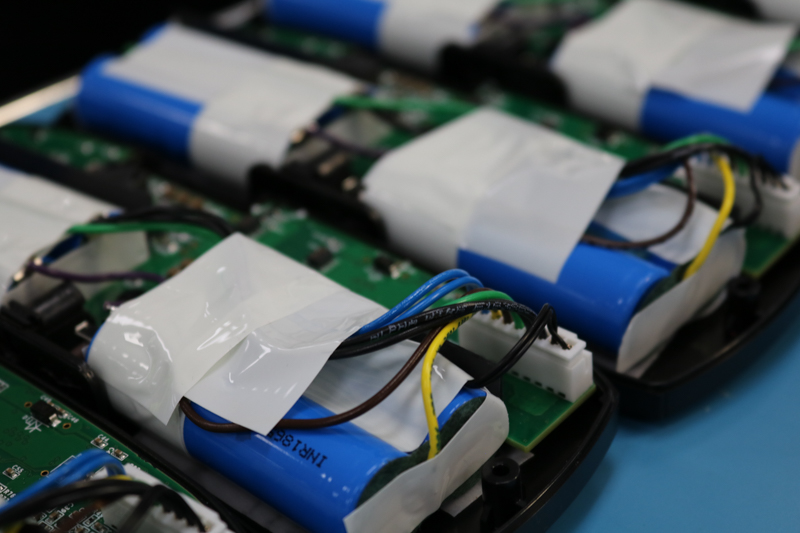
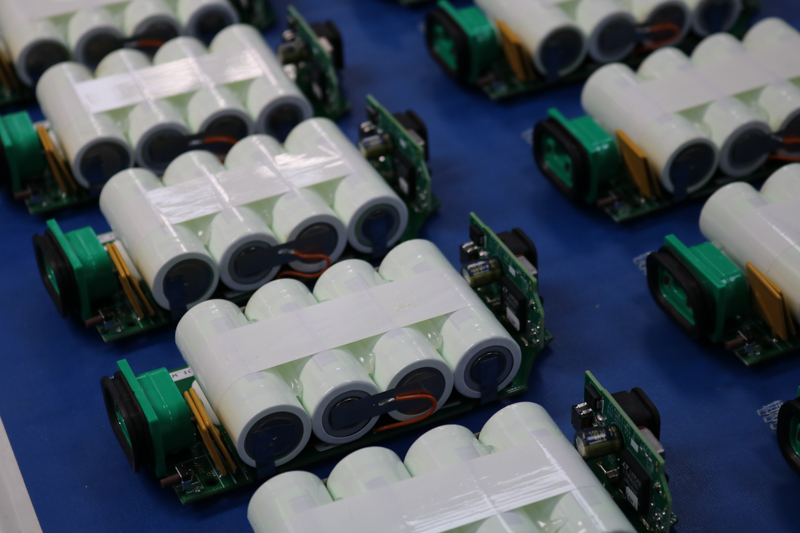
At a Glance: Custom Lithium Battery Packs
- Custom lithium battery packs support applications ranging from medical devices and portable electronics to military and industrial equipment, with both primary and secondary lithium battery options available.
- Epec designs custom battery packs with integrated safety features including overcurrent protection, overcharge protection, thermal management systems, and advanced battery management systems (BMS).
- With many years of battery industry experience, Epec provides custom battery pack development, offshore and domestic manufacturing capabilities, and application-specific solutions based on voltage, current, energy density, and size requirements.
Lithium Battery Capabilities
Epec offers a wide range of custom lithium battery solutions utilizing both primary and secondary lithium battery chemistries. Although both battery types use lithium as the primary active material, they differ in chemistry, construction, rechargeability, energy density, capacity, and application suitability.
Because lithium batteries can become volatile if improperly handled, battery pack safety is a key consideration throughout the design and development process.
Epec designs custom battery packs with safety features that include:
- Overcurrent protection
- Overcharge protection
- Thermal management systems
Epec also integrates advanced battery management systems to support battery protection, monitoring, performance optimization, and extended operational lifespan.
Primary Lithium Batteries
Primary lithium batteries are non-rechargeable batteries designed for one-time use. These batteries are commonly selected for applications that require long-term reliability, stability, high voltage, and high energy density.
Primary lithium batteries use lithium metal as the anode along with a non-aqueous electrolyte that conducts ions between the anode and cathode. Cathode materials can vary depending on application requirements and may include:
- Manganese dioxide
- Thionyl chloride
- Sulfur dioxide
Compared to secondary lithium batteries, primary lithium batteries provide higher voltage, higher energy density, and longer shelf life, although their capacity is more limited.
Best Applications for Primary Lithium Batteries
Primary lithium batteries are commonly used in applications where long-term reliability and stability are critical, including:
- Military and aerospace applications
- Medical devices such as pacemakers and hearing aids
- Remote sensors and monitoring devices
- Emergency backup systems
- High-performance flashlights
Secondary Lithium Batteries
Secondary lithium batteries are rechargeable batteries designed for repeated charging and discharging cycles. While they generally have lower energy density and shorter shelf life than primary lithium batteries, they provide higher capacity and improved cost-effectiveness over the lifetime of the battery.
Secondary lithium batteries use lithium ions as the active material transferred between the anode and cathode during operation. The anode material is typically graphite or a lithium metal oxide, while cathode materials vary depending on the application.
Common Cathode Materials Used in Secondary Lithium Batteries
- Lithium cobalt oxide (LCO): Used in high-performance applications such as laptops and smartphones
- Lithium manganese oxide (LMO): Used in power tools
- Lithium iron phosphate (LFP): Used in stationary energy storage systems and medical devices
- Lithium nickel manganese cobalt oxide (NMC): Used in grid-scale energy storage systems
Best Applications for Secondary Lithium Batteries
Secondary lithium batteries are commonly used in applications requiring rechargeability, high capacity, and cost-effective operation, including:
- Consumer electronics such as smartphones, laptops, and tablets
- Power tools and cordless devices
- Energy storage systems, including grid-scale and home energy storage
- Medical devices such as wearable devices and insulin pumps
Lithium Battery Management Systems
Epec’s battery management systems provide advanced battery protection and monitoring capabilities designed to support the safe and reliable operation of custom battery packs. The BMS can help optimize battery performance, extend battery lifespan, and reduce maintenance costs.
Custom battery packs are developed to meet specific application and customer requirements, helping ensure the battery solution aligns with the electrical, mechanical, and operational demands of the final product.
Development of Lithium Battery Packs
Developing a lithium battery pack requires expertise in electrical engineering, mechanical engineering, and chemistry. Battery packs must be designed to meet application-specific requirements, including:
- Voltage
- Current
- Energy density
- Size
Battery pack development also requires careful consideration of battery cell safety and long-term reliability.
Epec supports customers throughout the battery pack development process with resources covering:
Epec’s engineering team participates in every stage of development, from initial concept through final production. State-of-the-art tools and technologies are used throughout the design and manufacturing process to support quality and reliability.
Low-Cost and Domestic Battery Pack Production
Epec provides both offshore and domestic production capabilities to support customers across various industries and manufacturing requirements.
Offshore production facilities located in Asia provide cost-effective manufacturing solutions while maintaining product quality. These facilities provide access to a broad supplier and manufacturing network that supports scalable battery pack production.
Epec’s domestic production facility, located in the Boston, Mass., area, provides fast turnaround times and high-quality manufacturing services.
Financially Strong Company with Many Years of Experience
Selecting a financially strong and experienced lithium battery pack supplier is an important consideration for long-term program success. Epec Engineered Technologies has many years of experience in the battery industry and a proven track record of delivering high-quality battery solutions.
Epec’s financial stability supports long-term customer relationships and ongoing battery production requirements across multiple industries and applications.
Epec's Experience in the Battery Industry
Epec has worked with customers across a wide range of industries, developing customized battery solutions designed to address unique application requirements and battery design challenges.
The company’s commitment to quality and customer satisfaction is reflected in its ISO 9001:2015 certification. Epec’s quality management system helps ensure that every battery pack meets or exceeds customer requirements and expectations.
Frequently Asked Questions
Quick Links
- What is the difference between primary and secondary lithium batteries?
- What applications are best suited for primary lithium batteries?
- What applications typically use secondary lithium batteries?
- What safety features are included in custom lithium battery packs?
- What does a battery management system (BMS) do?
- What factors are considered during lithium battery pack development?
- Where are Epec's battery packs manufactured?
What is the difference between primary and secondary lithium batteries?
Primary lithium batteries are non-rechargeable batteries designed for one-time use, while secondary lithium batteries are rechargeable and designed for repeated charging and discharging cycles.
What applications are best suited for primary lithium batteries?
Primary lithium batteries are commonly used in military and aerospace applications, medical devices, remote sensors, emergency backup systems, and high-performance flashlights where long-term reliability and stability are important.
What applications typically use secondary lithium batteries?
Secondary lithium batteries are commonly used in consumer electronics, cordless power tools, energy storage systems, wearable medical devices, and insulin pumps.
What safety features are included in custom lithium battery packs?
Epec designs battery packs with safety features that include overcurrent protection, overcharge protection, thermal management systems, and battery management systems (BMS).
What does a battery management system (BMS) do?
A battery management system provides battery protection and monitoring functions that help support safe operation, optimize battery performance, extend battery lifespan, and reduce maintenance costs.
What factors are considered during lithium battery pack development?
Battery pack development includes consideration of voltage, current, energy density, size, battery safety, and long-term reliability requirements for the specific application.
Where are Epec's battery packs manufactured?
Epec provides both offshore production in Asia and domestic battery pack manufacturing in the Boston, Mass., area to support a range of production, quality, and turnaround requirements.
Need Help with a Custom Lithium Battery Pack?
From design to production, our team of experienced engineers at Epec is here to help you design a custom lithium battery pack that exceeds your needs.
Request a Quote Request Design Support Request More InformationRequest a FREE Quote!
We are here to help you will all your custom battery pack needs.
Get Your Quote Now! Not Ready for a Quote? Request more info or email us your inquiry.Ebook - BMS Design Guide for Custom Battery Packs
 Download Your Copy
...or Download Our Custom Battery Pack Design Guide
Download Your Copy
...or Download Our Custom Battery Pack Design Guide