



Ruggedizing Overmolded Strain Relief in Custom Cable Assembly
Challenge
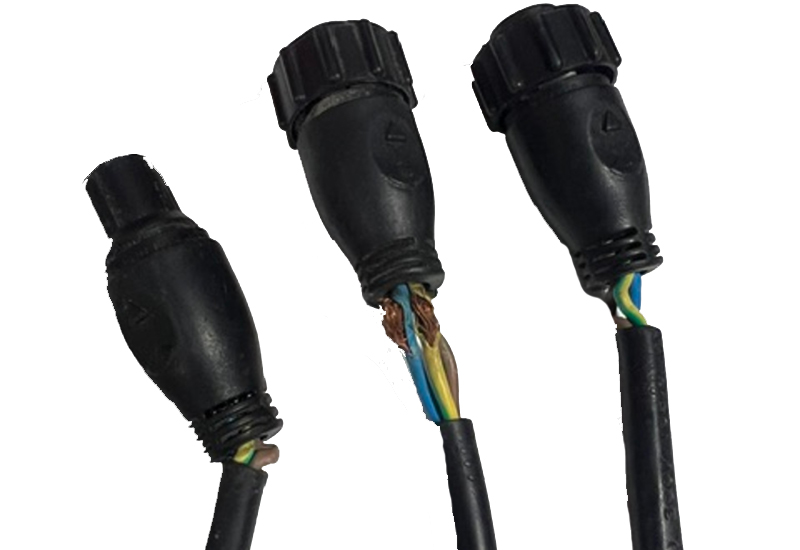
An existing customer approached Epec after experiencing field failures with an overmolded cable assembly assembly that had been in production for approximately two years. The design incorporated a custom overmold attached to a common circular connector and had initially been developed using Epec's standard overmold design practices.
At the time of the original development, the exact conditions in which the cable would ultimately be used were not fully known. The initial design performed as expected based on the information available, but as the assemblies accumulated more field time, the customer began identifying failures near the transition point where the cable jacket entered the overmold.
At the time of the original development, the exact conditions in which the cable would ultimately be used were not fully known. The initial design performed as expected based on the information available, but as the assemblies accumulated more field time, the customer began identifying failures near the transition point where the cable jacket entered the overmold.
The customer contacted Epec to review the failures and determine whether changes could be made to improve the assembly's durability.
Initial observations suggested that repeated flexing and bending were creating a concentrated mechanical stress point immediately adjacent to the overmold. Because the existing strain relief ended relatively close to the connector, bending forces were being concentrated within a small section of the cable jacket. Over time, repeated movement and localized damage in this area could lead to cable failure
Rather than simply replacing the affected assemblies, the customer wanted to understand why the failures were occurring and determine whether the existing design could be modified to withstand better the actual conditions encountered in the field.
Solution
Epec began by holding a conference call between both engineering teams to review the cable design, reported failures, and operating conditions. While photographs and descriptions provided useful information, Epec requested that the customer return a physical assembly that had experienced actual field damage so the failure could be examined directly.
After evaluating the returned assembly, Epec confirmed the initial assessment. The failure was concentrated at the transition between the molded strain relief and the cable jacket. Repeated bending at this location was placing localized stress on the jacket instead of distributing the mechanical load across a larger section of the cable.
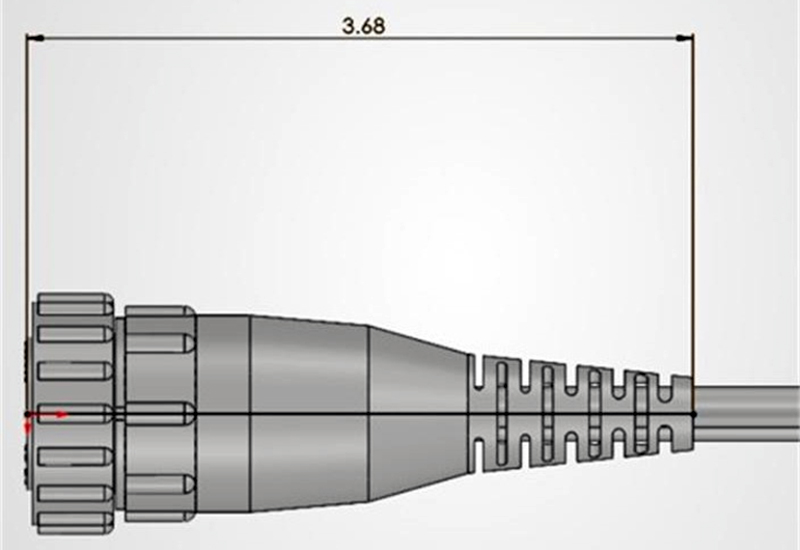
Epec evaluated several potential solutions and presented the customer with different options for improving the assembly. The preferred approach was to modify the existing overmold tooling and redesign the strain relief to create a longer, more gradual transition between the connector and cable.
The redesigned connector and overmold assembly had a combined overall length of approximately 3.7 inches, making it about one inch longer than the previous design. Rather than simply extending the existing geometry, Epec incorporated a tapered strain relief section intended to distribute bending forces across a greater length.
This change addressed the primary failure mechanism identified during the investigation. By creating a more gradual transition from the rigid connector and overmold into the flexible cable, the redesigned geometry reduced the concentrated bending forces placed on a single area of the cable jacket.
Epec also recommended adding a crimped copper ring inside the body of the overmold. This additional design feature was intended to secure and stabilize the internal portion of the assembly, providing another level of mechanical reinforcement within the molded structure.
To move the project forward, Epec provided the customer with a preliminary design concept, a tooling modification plan, and the associated costs and timeline. Implementing the design changes required approximately $2,000 in non-recurring engineering (NRE) costs to modify the existing overmold tooling. Once the customer approved of the changes, Epec could complete the tooling modifications and produce a new sample lot within approximately four to five weeks. Epec also developed an updated manufacturing drawing and 3D STEP model incorporating the proposed changes for engineering review and approval.
Result
After reviewing Epec's proposed solution, the customer approved the redesign and issued a purchase order covering the engineering changes, tooling modifications, and production of a new sample lot.
The final design incorporated two significant improvements intended to address the original field failures. The approximately one-inch extension and tapered strain relief geometry provided a longer transition area over which bending forces could be distributed, reducing the stress concentration previously occurring at the cable jacket. The internal copper crimp ring provided additional stabilization and mechanical support within the overmold.
With the updated manufacturing drawings and 3D model approved, Epec released the redesigned samples into production for customer evaluation.
While long-term field performance will ultimately determine the full impact of the design changes, the project demonstrates the importance of evaluating cable assemblies based on their actual operating environment. A design that meets its original requirements may require further refinement once real-world patterns of movement, bending, and handling become better understood.
By examining an actual failed assembly and identifying the mechanical forces contributing to the damage, Epec was able to develop a targeted design change rather than simply replacing the existing cable or making assumptions about the cause of failure. The resulting solution addressed both the external strain relief geometry and the internal mechanical stability of the assembly.
This collaboration also highlights the value of maintaining an ongoing engineering relationship after a cable assembly enters production. When field conditions revealed a weakness that was not apparent during the original development process, Epec worked directly with the customer to investigate the failure, modify the tooling, and develop a more rugged design intended to improve long-term cable performance.
Need Help Improving Cable Assembly Reliability?
Whether you're developing a new cable assembly or troubleshooting failures in an existing design, Epec's engineering team can help identify the root cause and recommend practical design improvements. From custom overmolds and strain relief optimization to connector selection, material recommendations, and manufacturability reviews, we work with customers to develop cable assemblies built for long-term reliability in demanding applications.
Contact Epec today to discuss your cable assembly requirements or request a design review from our engineering team.
Request a Quote Request Design Support