


Flex & Rigid-Flex Circuit Capabilities
Flex and rigid-flex circuit capabilities span materials, substrates, adhesives, solder mask/coverlays, and surface finish treatments selected to support application performance and durability. These flex circuit and rigid-flex designs are used to simplify assembly, reduce interconnect errors, and improve reliability while maintaining cost-efficiency, especially in high-density, space-limited designs requiring controlled impedance, shielding, and advanced interconnect features.
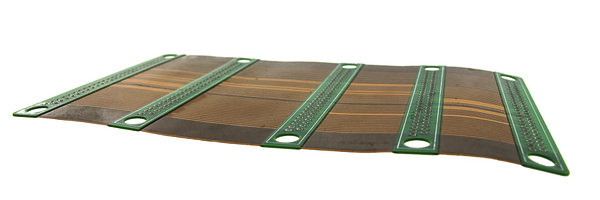
At a Glance: Flexible PCB Capabilities
- Broad flex and rigid-flex PCB capability coverage: Supports a wide range of materials, substrates, adhesives, solder mask/coverlays, and surface finish treatments selected to improve application performance and durability.
- High-density performance options: Offers multilayer flexible PCBs up to 20 layers and multilayer rigid-flex up to 20+ layers, with fine features down to 0.003" lines and 100 micron vias, plus options such as controlled impedance, EMI/RF shielding, and blind/buried vias to support signal integrity in dense designs.
- Full build services and reinforcement features: Provides connector/pin/contact assembly (including SMD and PTH), in-circuit testing, conformal coating, and electrostatic protective packaging, along with stiffener-supported areas (FR-4, polyimide, etc.) and multiple stiffener materials/thicknesses to add support, strain relief, mounting, and heat dissipation.
Our Flexible PCB Capabilities Include:
Epec provides a broad set of flex and rigid-flex circuit options, including advanced configurations, high-density multilayer constructions, and manufacturing services that support electrical performance, miniaturization, and reliability.
Single or Double-Sided Flex Circuits
Flex circuit designs can be configured to streamline assembly while reducing opportunities for interconnect errors. Available configurations include thru-hole, reverse bare, floating fingers/sculpted circuits, and ZIF terminations, supporting designs that prioritize reliability without sacrificing cost-efficiency.
Multilayer Flexible PCBs up to 20 layers
High-density multilayer flexible circuits support multiple conductive layers and can include features such as EMI shielding, through-hole assembly, embedded resistors, and controlled impedance structures. Using ground/shield planes effectively, paired with appropriate connector interfaces, helps support high-speed signal integrity in multilayer flex designs.
Multilayer Rigid-Flex up to 20+ layers
Rigid-flex circuit designs add three-dimensional capability for applications where space is limited and mechanical packaging is challenging. These designs can enable multiple board and cable terminations to be processed in a single reflow pass, helping optimize both space use and assembly efficiency.
Lines and Spaces
Fine-feature design supports higher density routing and smaller interconnect geometries. With lines down to 0.003" and vias down to 100 microns, flex and rigid-flex designs can leverage smaller component sizes and pitches to enhance electrical performance, signal integrity, and thermal performance, especially where routing space and via diameters must be minimized. It is important to be aware of flexible PCB line and space limitations.
Installation of Connectors, Pins, Contacts, SMD, & PTH Component Assembly
Manufacturing services include connector, pin, contact, SMD, and plated through-hole component assembly options. Additional services include in-circuit testing, conformal coating, and electrostatic protective packaging. Facilities are IPC 6012/6013 Class I, II, III, and ISO 9001, AS9100 certified. All assembly services require review and approval before proceeding.
Stiffener Supported Areas (using FR-4, Polyimide, etc.)
Stiffeners provide added support in targeted areas of flexible circuitry. Attachment methods include thermal bonding and Pressure Sensitive Adhesive (PSA), selected based on reflow cycle needs and the material the stiffener must adhere to. PSA options referenced include 3M Tape, 3M467, and 3M9077, with selection driven by application and process requirements.
Blind & Buried Vias
High-density rigid-flex circuits often use blind and buried vias to support signal routing within dense component regions or constrained design areas. These via structures can help improve routing efficiency where access and fanout are limited by geometry and density.
Controlled Impedance
As signal switching speeds, transition times, and clock rates increase, controlling reflections becomes increasingly important. Controlled impedance designs use uniform laminate materials and precise etching processes to stabilize signal transmission by avoiding cross-sectional changes in conductors. This approach is used to support consistent signal integrity in high-speed flex and rigid-flex designs.
EMI/RF Shielding
EMI/RF shielding solutions are available using copper, silver ink, and shielding films. These protective shields are used to reduce noise and manage signal line impedance while meeting electromagnetic and electrostatic interference requirements. Shielding approaches are selected based on device needs and the performance targets of the circuit.
Circuit Size
Flexible circuits can be designed up to 24" in length or greater, depending on the technology selected and application requirements. Circuit size considerations are evaluated alongside density, interconnect needs, and the mechanical demands of the final assembly.
Substrates
A range of substrate materials is available to align with electrical, mechanical, and environmental needs, including:
- Polyimide (1–4 mil)
- Epoxy
- Acrylic
Copper
Copper options include:
- Rolled Annealed (RA) Copper
- Electro-deposited (ED) copper
Flex Circuit Adhesives
Adhesive selection is matched to the application and manufacturing process. Options include:
Breakdown can be found here, Adhesives in Flexible Circuit Boards: Types and their Uses.
- Modified Acrylic
- Modified Epoxy
- Pressure Sensitive Adhesives (PSA)
Solder Mask / Coverlay
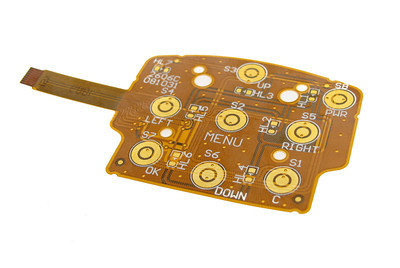
Coverlay options provide protective functions like traditional solder mask while adding flexibility and durability suited to flexible circuits. Available options include:
- Polyimide coverlay (1/2 mil to 2 mil)
- Flexible Liquid Photoimageable (LPI) solder mask
See our blog post titled what is a flexible circuit coverlay to learn more.
Surface Treatment & Finishes
Surface treatments and finishes are offered to support circuit performance and durability, including:
- ENIG (Electroless Nickel – Immersion Gold)
- Immersion Silver
- Hard Gold
- HAL (Non-leaded, RoHS)
- HAL (Leaded)
Stiffeners
Stiffeners reinforce selective areas of flexible circuitry to provide component support, durability, and mounting options. They can also serve as strain relief and assist with heat dissipation. Bonding approaches include Pressure Sensitive Adhesive (PSA) and Temperature Sensitive Adhesive (TSA), selected based on assembly needs and the targeted stiffened region.
Stiffener Materials:
Stiffener materials are selected based on the design’s mechanical and assembly requirements. Options include:
- Unclad FR4/G10
- Polyimide
- Stainless steel
- Aluminum
Typical stiffener thickness ranges from 0.004" to 0.062". Specialty thicknesses available on a case-by-case basis.
Specifications
| Parameter | Value | Units |
|---|---|---|
| Multilayer flexible PCB capability | Up to 20 | layers |
| Multilayer rigid-flex capability | Up to 20+ | layers |
| Minimum line width referenced | 0.003 | in |
| Minimum via size referenced | 100 | microns |
| Flexible circuit length | Up to 24 or greater | in |
| Polymide substrate thickness | 1–4 | mil |
| Polymide coverlay thickness | 0.5–2 | mil |
| Stiffener thickness range | 0.004–0.062 | in |
Frequently Asked Questions
Quick Links
- What problems do flex PCB designs help address during assembly?
- What configurations and terminations are available for flex circuits?
- What capabilities are supported in high-density multilayer flexible circuits?
- How do rigid-flex circuit designs help in space-limited applications?
- What fine-feature limits are referenced for lines and vias?
- What assembly and test services are included with flex and rigid-flex builds?
- How are stiffeners attached and selected for flex circuits?
What problems do flex PCB designs help address during assembly?
Flex circuit designs are described as simplifying assembly while reducing interconnect errors and improving reliability, with an emphasis on maintaining cost-efficiency. This benefit is supported through available configurations and termination options that fit different assembly requirements.
What configurations and terminations are available for flex circuits?
The page lists options including thru-hole, reverse bare, floating fingers/sculpted circuits, and ZIF terminations. These configurations are offered to support different mechanical and interconnect needs within flexible circuit designs.
What capabilities are supported in high-density multilayer flexible circuits?
Multilayer flexible circuits can support multiple conductive layers and may include EMI shielding, through-hole assembly, embedded resistors, and controlled impedance features. The use of ground/shield planes and appropriate connector interfaces is highlighted for supporting high-speed signal integrity.
How do rigid-flex circuit designs help in space-limited applications?
Rigid-flex designs provide three-dimensional capability suited to extreme space limitations. The page also describes that rigid-flex designs can enable multiple board and cable terminations to be processed in a single reflow pass to improve space use and efficiency.
What fine-feature limits are referenced for lines and vias?
The page references lines down to 0.003" and vias down to 100 microns. These fine features are associated with supporting small component sizes and pitches to improve electrical performance, signal integrity, and thermal performance when routing space is limited.
What assembly and test services are included with flex and rigid-flex builds?
Services include connector, pin, contact, SMD, and plated through-hole component assembly, plus in-circuit testing, conformal coating, and electrostatic protective packaging. The page also notes IPC 6012/6013 Class I, II, III and ISO 9001, AS9100 certifications for the facilities.
How are stiffeners attached and selected for flex circuits?
Stiffeners can be attached using thermal bonding or Pressure Sensitive Adhesive (PSA), with PSA choice driven by reflow cycle needs and the material the stiffener must adhere to. The page references PSA options such as 3M Tape, 3M467, and 3M9077, and also describes stiffeners as supporting component areas, mounting, strain relief, and heat dissipation.
Maximize Performance with Comprehensive Flex and Rigid-Flex Circuit Solutions
From single-sided flex circuits through multilayer rigid-flex designs, Epec supports solutions for electrical performance, miniaturization, and reliability. AS9100 and ISO 9001 certifications are part of the quality framework supporting these builds. Contact Epec to discuss project requirements and align material sets, constructions, and finishes with the intended application.
Request a Quote Request Design Support Request More InformationRequest a FREE Quote!
We are here to help you with all your rigid-flex PCB needs.
Get Your Quote Now! Not Ready for a Quote? Request more info or email us your inquiry. Sign Up For a FREE Account
Register today to quote and order your flex & rigid-flex circuit boards online, 24/7.
Ebook - Top 6 Quality Issues Seen in Flex & Rigid-Flex PCBs
 Download Your Copy
... Or Download Our Flex & Rigid-Flex Circuits Design Guide
Free DFM File Check

Submit your flex or rigid-flex PCB data files and we will run a complete DFM check for manufacturability.
Submit Your Data