


Flexible Heaters for the Food Industry
For the food industry, there are many occasions when ingredients, processed products, and ready-made meals require to have a certain temperature. Keeping food at a safe temperature for consumption is one of the most important factors that we associate with the food industry. Letting ready-made food become cold can promote bacteria growth, which can cause sickness.
Yet, there are other times when items must be heated to a certain degree for a variety of uses and packaging processes. Heating ingredients may be required during the cooking process without using convection heating or direct flame. For processing and packaging operations, liquid ingredients may have to be heated to a certain temperature to prevent solidification and clogging in hoses and assemblies when dispensed into bottles, cans, and IBCs.
At a Glance: Flexible Heaters for the Food Industry
- Polyimide/Kapton® flexible heaters provide precise temperature control for food processing, food holding, packaging, and dispensing applications where maintaining consistent temperatures is critical.
- The etched foil construction delivers uniform heat transfer and can be customized for curved surfaces, drums, food bins, rolling racks, warming cabinets, and other food service equipment.
- Flexible heaters help support viscosity control, food quality, and temperature management while minimizing outgassing in enclosed food preparation and storage environments.
Benefits of Flexible Heaters Used in the Food Industry
Polyimide / Kapton® flexible heaters provide temperature control for food industry applications. They can be used in food trays, heating cabinets, display cabinets and other devices. These flexible heaters are made from polyimide materials with etched foil elements that are placed in between the layers using acrylic adhesive or PET adhesive. This design increases the flexibility of the heater while allowing for the proper thermal transfer between the heater and the heated surface. Check out the reasons why Kapton® flexible heaters are the ideal solution for the food industry.
Consistent Thermal Transfer
Kapton® flexible heaters can reach temperatures up to 392°F and can be used in cold environments with a low temperature threshold of -320°F. Since it consists of etched foil elements, this printed circuit technology offers more thermal transfer consistency. In addition, a Kapton® flexible heater allows for the user to differentiate power distribution if there are different temperature ranges along the application. This factor helps to offset any lack of thermal consistency.
With consistent thermal transfer, food manufacturers can ensure the entire application provides the right amount of heat in the appropriate areas. The Kapton® flexible heater can also be placed along curved surfaces or has custom designs that cause it to contour in different ways. The Kapton® flexible heaters can be placed on around drums with liquid food products, food bins and even rolling racks.
Constant Temperature Management
For the food industry, some products must be kept at a steady temperature, yet the heating source must come in smaller sizes. This can be a challenge. As a smaller heating source can focus too much heat in the specific spot, or not enough because of the fewer components that is allowed in the heater design.
A Kapton® flexible heater can come in small sizes up to 10X7" and has a thinness of 0.007." Even with these small sizes, the flexible heater can achieve watt densities of 2.5W/in2 up to a possible 50W/in2. So, these small heaters can provide enough localized heat that can be managed so there is a constant temperature based on the requirements of the food product that needs to be heated.
Low Outgassing in Enclosed Spaces
Restaurants, hotels, resorts, bakeries, cafeterias, and other commercial businesses that serve food to customers may keep food in enclosed carts, banquet cabinets, pass-thru cabinets, food display racks, proofing cabinets, and roll-in racks. These areas hold a specific temperature to keep finished meals warm or to help prepare certain ingredients during the cooking process such as rising dough.
Due to the cabinet, display, or rack being fully or partially enclosed on all sides, a Kapton® flexible heater is desired in these spaces. The materials used for these flexible heaters have low outgassing from the heat and extended use. So, there will be no released gasses that may infiltrate the cabinet and impact the taste and quality of the food.
Assists with Viscosity Control
Food processers that create liquid food products, such as sauces, condiments, and salad dressings, require that the food retain a certain viscosity so that it can travel through pipes and dispensers. If the food cools, it may become too solid to flow properly, gumming up processing and packaging systems. Kapton® flexible heaters help to maintain the viscosity of the material for final processing.
Maintains Excellent Food Quality
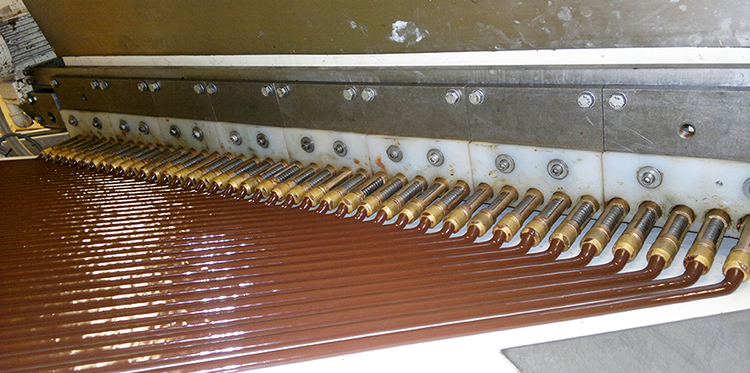
Other foods, such as melted chocolate, can have their quality and texture impacted based on its viscosity and how its temperature changes. The food must stay warm until the customer consumes it so they can enjoy the full flavor and texture of the product. A Kapton® flexible heater may be placed into food trays and other food service equipment to provide the adequate temperature.
In addition, fast food and banquet food may sit out for certain lengths of time before being served. This food can go into a "temperature danger zone," where the temperature dips into a 41°F to 135°F range. The FDA food code states that food products should never be within these temperature ranges for more than four cumulative hours as pathogen growth increases. A polyimide flexible heater placed within warming cabinets and banquet cabinets can maintain temperatures above this range to lessen pathogen growth.
Flexible Heaters from Epec
Epec provides Kapton® flexible heaters for food industry equipment manufacturers and processors. Reach out to our engineers today to learn more about our flexible heaters so we can help you design and manufacture the equipment for your specific needs.
Frequently Asked Questions
Quick Links
- Why are flexible heaters used in food industry applications?
- What are the benefits of Kapton® flexible heaters for food applications?
- How do flexible heaters help maintain product consistency and viscosity?
- Why is low outgassing important in enclosed food service equipment?
- How can flexible heaters help support food safety?
Why are flexible heaters used in food industry applications?
Many food products and ingredients must be maintained within specific temperature ranges during processing, packaging, storage, and serving. Flexible heaters provide controlled heat without requiring direct flame or conventional convection heating methods. They can be integrated into equipment where space is limited or where localized heating is necessary. This makes them suitable for food trays, heating cabinets, display cabinets, and processing equipment.
What are the benefits of Kapton® flexible heaters for food applications?
Kapton® flexible heaters are constructed from polyimide materials with etched foil heating elements positioned between layers using acrylic or PET adhesive systems. This design promotes flexibility while supporting efficient thermal transfer between the heater and the heated surface. The heater can conform to curved surfaces and custom shapes used throughout food processing equipment. According to the source, these heaters can operate from as low as -320°F to temperatures up to 392°F.
How do flexible heaters help maintain product consistency and viscosity?
Many liquid food products, including sauces, condiments, and salad dressings, require controlled temperatures to maintain proper viscosity. If these materials cool excessively, they may begin to solidify and create flow issues within processing or packaging equipment. Flexible heaters provide consistent heat that helps keep products moving through pipes, dispensers, and filling systems. Maintaining temperature can improve processing efficiency and reduce clogging concerns.
Why is low outgassing important in enclosed food service equipment?
Food warming cabinets, proofing cabinets, banquet cabinets, display racks, and similar equipment often operate in enclosed or partially enclosed environments. The source notes that Kapton® flexible heaters provide low outgassing during operation and extended use. This characteristic helps prevent released gases from accumulating within the enclosure. As a result, food quality and taste are less likely to be affected by the heating system.
How can flexible heaters help support food safety?
Maintaining proper food temperature is a key part of controlling pathogen growth. The source notes that food products should not remain within the 41°F to 135°F temperature danger zone for more than four cumulative hours because pathogen growth increases. Flexible heaters installed in warming cabinets, banquet cabinets, and similar equipment help maintain temperatures above this range. Consistent temperature control supports both food quality and food safety throughout storage and service.
Increase Food Safety and Quality with Flexible Heaters!
Consistent temperatures are vital for food safety and impeccable quality. Whether preventing bacteria growth in ready-made meals, ensuring liquids flow effortlessly in processing, or delivering perfect food experiences every time, flexible heaters offer unparalleled efficiency. For food industry professionals, investing in flexible heaters isn't just a choice; it's a commitment to excellence.
Request a Quote Request Design Support Request More InformationRequest a FREE Quote!
We are here to help with all your custom flex heater needs.
Get Your Quote Now! Not Ready for a Quote? Request more info or email us your inquiry.