


Cable Assembly Processing Capabilities
Epec supports a wide variety of custom cable assemblies that range in technology and complexity from low voltage hook up wires to overmolded breakout assemblies, as well as RG316 coaxial cable assemblies. Whether it is taking an existing industry standard like USB and modifying it, or if it’s a completely new design, our customized cable assemblies provide solutions for all market sectors.
Epec services our customers and helps them achieve their goals through an integrated system of services that will foster a strong and collaborative relationship. We use the highest quality materials, components, and workmanship to design, develop, and manufacture cable assemblies. Built using ISO approved manufacturing processes, our automated wire preparation and assembly systems empower us to supply both your prototype runs and full rate production requirements in a timely manner.
In addition, each new cable design undergoes a complete design for manufacturability review offering opportunities to reduce supply chain risk, improve reliability, or save money. Upon program launch, an integrated product team that consists of customer service, manufacturing, engineering, logistics, and quality will verify that all specifications and program objectives are addressed keeping you the customer informed and up to date.
Epec follows IPC/WHMA-A-620 for all cable assembly, test and inspection practices for all applicable design applications.
At a Glance: Cable Processing Capabilities
- Comprehensive cable assembly processing capabilities spanning wire preparation, automation, shielding, ruggedization, testing, connector integration, and custom overmolded designs.
- IPC/WHMA-A-620 compliant manufacturing supported by ISO-approved processes, design for manufacturability reviews, and cross-functional product teams focused on quality, reliability, and supply chain optimization.
- Extensive material, conductor, connector, and testing options that enable fully customized cable assemblies for demanding commercial, industrial, medical, aerospace, and defense applications.
Our Cable Assembly Processing Capabilities Include:
Connector, Terminals, and Crimp Options
- Wire to wire connectors
- Wire to board connectors
- Single and multi-row connectors
- Spade terminals
- Fork terminals
- Ring terminals
- Ferrules
- Splicing and butt connections
- Insulated/partially insulated terminals
- Standard and gold plating options
- IPC-620 compliant crimping connections
- Automated and manual crimp stations available
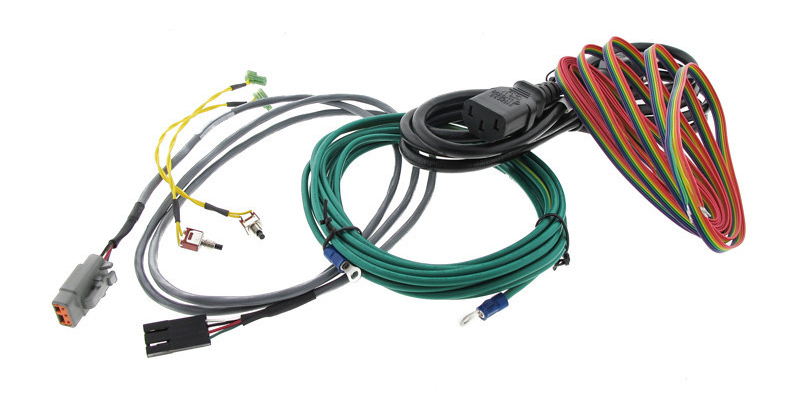
Consider a wire to board connector for a quick solution to terminate your cable to a PCBA. See our blog post on Using Wire-To-Board PCB-Mounted Connectors In Your Cable Assembly for more information.
Wire Preparation and Automation
- Hard wired
- Flying leads with variable lengths
- Tinned
- Stripped and tinned
- Cut leads
- Precise cut lengths
- Strip and tin tolerances of +/- 1mm or better
- Ultrasonic weld preparation
- Jacket scoring
- Heat shrink jacketing
- Tie and lacing
- Custom wrapped tapes and foils
- Conduit
- Extruded tubing
As complexity increases on wire harnesses, some of the benefits of automation can be impacted. Where possible, decreasing the complexity of your cable may have exponential cost and lead time benefits through automation. See our blog pots titled Why Complex Wire Harnesses Cannot Be Fully Automated for more information.
Ruggedization and Customization
- Molded members
- Injection molded components
- Mating housings
- Overmolded strain relief
- Overmolded PCBA assemblies
- Customized RTV potting
- Epoxy encapsulation and potting
- Sleeving and wraps
- Nylon braiding
- Shielded and conductive overbraids
- Barcode
- Four color ink stamping
- Circuit Identification
- Heat shrink labels
If you are considering a custom overmolded design, Managing The Development Of Your Overmolded Cable webinar covers several design tips to reduce risk and cost of your project.
Shielding
- Braided wire
- Overbraiding
- EMI/RFI shielding
- Polyester/aluminum foil
- Polyester/aluminum foil and braid spiral serve wire
- Foil tapes and wraps
- Copper tape with adhesive
- Mil-Spec certified and tested
Since shielding can add cost, weight, or complexity to your cable, and not all shielding is the same, it’s best to review options before moving forward. Read more in our blog post on an overview of cable shielding options for your project.
Adding Components and Sub-Assemblies to Your Wire Harness
- HDMI/Display Port/Mini Display Port
- USB, USB-A, USB-B, MicroUSB, USB MINI
- LEDs and other lighting options
- Fan assemblies
- Battery terminals
- PCBAs
- PCBA housings and enclosures
- Normally open switches
- Normally closed switches
- Grommets and elastomeric boots
- Embedded systems and microcontrollers
- Custom machined members
- Sheet metal and formed members
It is easy to aim for the stars and try to build the perfect solution, especially on your first shot. But sometimes there are simple steps that can be taken to dramatically ease the burden on Engineers. Using an existing and proven design with slight customization can be the difference in your project.
Material Additives
- Rodent resistant
- Anti-microbial
- Anti-fungal compounds
- Improved hydrophobicity
Adding rodent repellents to your custom cable extrusion helps address a very unique requirement to mitigate the risk damage and open circuits from pests.
Connector Options and Partners
- Molex
- Amphenol
- Glenair
- TE/AMP
- JST
- Hirose
- Samtec
- Nicomatic
- Canon
- Souriau
- As well as many other producers
Epec supports all major connector and component manufacturers. Epec offers a complete portfolio of form, fit, and function replacement parts as drop in substitute components that can help reduce cost and lead time in your project. See our 5 tips when substituting connectors for your custom cable assembly blog post for more information.
Insulation/Jacket Materials
- PVC - Polyvinyl Chloride
- IRR/PVC - Irradiated Polyvinyl Chloride
- XLPE - Cross-Linked Polyethylene
- Vinyl (PVC)
- Silicone Jacketed
- Customized Silicone Extrusions
- SR-PVC - Semi Rigid Polyvinyl Chloride
- Cellular Polyethylene
- EPDM - Ethylene Propylene Diene Monomer
- TPE/TPR - Thermoplastic Elastomers
- PE - Polyethylene
- LDPE - Low Density Polyethylene
- HDPE - High Density Polyethylene
- Cellular (Foam) Polyethylene
- PU - Polyurethane
- Polyurethane/Nylon
- Low Smoke Plenum Co-Polymers/PVC
- PP - Polypropylene
- Cellular (Foam) Polypropylene
- FEP - Fluorinated Ethylene Propylene
- TFE - Tetrafluoroethylene
- PTFE - Polytetrafluoroethylene
- ETFE Tefzel
- PVDF Kynar
- ECTFE Halar
Where possible, selecting readily available wire with standard jacket options helps get a proof of concept moving forward. See our blog post for tips for using common UL wire to get to market faster.
Conductor Options, Materials, and Coatings
Epec offers 'that range from standard and low-cost tinned copper wire, to mil-spec silver plated conductor options.
Conductor Cross Section Options
- 4AWG to 40 AWG
- 1 Conductor to 60+ legged multiconductor cables
- LVDS and twisted pairs
- Coaxial cables
- -65C to +250C temperature ratings
Voltage Rating Options
- 30V
- 300V
- 600V
- 1500V
- 3000V
Conductor Options
- Bare copper wire
- Tinned copper wire
- Heavy tinner copper wire
- Silver plated copper wire
- Nickel plated copper wire
- Copperweld/copper covered steel
-
Specialty conductor coatings including:
- Prefused copper
- Overcoat copper
- Top coated copper
-
Stranding constructions
- Solid
- Bunched
- True concentric
- Rope lay
See our blog post for more information about our Cable Assembly Conductor Options.
Testing
-
Approvals
- UL, CSA, and industry testing procedures
-
Standard electrical tests
- Continuity and resistance measurements
- HIPOT/dielectric testing
- Insertion loss/VSWR
- Automated low voltage test stations
-
Temperature and environmental testing
- In house ESS chamber
- In house thermal chambers capable of operational testing from -50C to +80C
- Complete
-
EMI / EMC testing
- Radiated emissions
- Radiated susceptibility
- Conducted emissions
- Conducted susceptibility
- ESD/air discharge test
-
IP Waterproof and pressure testing
- Leak testing using positive pressure fixtures
- Submersion tests to identify leak paths
-
Custom wire harness test fixtures
- Custom pogo pin fixtures
- Automated test stands
- Customer supplied test equipment
- Custom testing options are available upon request
See our blog post for more information on exploring test options for your customer cable assembly.
Frequently Asked Questions
Quick Links
- What types of cable assemblies can Epec manufacture?
- How does Epec ensure quality and manufacturability throughout a project?
- What customization and ruggedization options are available?
- What conductor, insulation, and connector options are available?
- What testing capabilities are available for cable assemblies?
What types of cable assemblies can Epec manufacture?
Epec supports a broad range of cable assembly technologies, from simple low-voltage hookup wires to highly engineered overmolded breakout assemblies and coaxial cable assemblies. Designs can be based on existing industry standards such as USB or developed as entirely custom solutions. This flexibility allows Epec to support applications across virtually every market sector while tailoring the design to specific electrical, mechanical, and environmental requirements.
How does Epec ensure quality and manufacturability throughout a project?
Every new cable assembly design undergoes a design for manufacturability review to identify opportunities for cost reduction, reliability improvements, and supply chain risk mitigation. Once a program moves into production, an integrated product team consisting of customer service, manufacturing, engineering, logistics, and quality personnel works together to verify that all specifications and objectives are met. Manufacturing is performed using ISO-approved processes, and all applicable cable assembly, testing, and inspection practices comply with IPC/WHMA-A-620 requirements.
What customization and ruggedization options are available?
Epec offers numerous customization features including overmolded strain reliefs, molded components, potting, epoxy encapsulation, custom housings, braiding, shielding, labels, circuit identification, and custom wraps. Additional options such as conductive overbraids, environmental sealing, and specialized material additives can further enhance durability. These capabilities help cable assemblies withstand demanding conditions such as vibration, moisture, abrasion, chemicals, and other environmental challenges.
What conductor, insulation, and connector options are available?
A wide variety of conductor materials, plating options, and insulation systems are supported. Conductor selections range from standard tinned copper to silver-plated and nickel-plated copper, while jacket materials include PVC, XLPE, silicone, polyurethane, PTFE, FEP, ETFE, and many other specialized compounds. Epec also supports connectors from leading manufacturers including Molex, Amphenol, Glenair, TE Connectivity, JST, Hirose, Samtec, Nicomatic, Canon, and Souriau, as well as compatible replacement components.
What testing capabilities are available for cable assemblies?
Testing services cover electrical, mechanical, environmental, and compliance requirements. Available testing includes continuity and resistance verification, HIPOT and dielectric testing, insertion loss and VSWR measurements, EMI/EMC testing, ESD testing, waterproof and pressure testing, leak detection, and custom fixture-based validation. Epec also utilizes environmental testing chambers capable of operational testing from -50°C to +80°C, helping ensure assemblies perform reliably under real-world operating conditions.
Optimize Your Project with Tailored Cable Solutions
Tap into Epec's expertise and ISO-certified processes for custom cable assemblies designed to meet your exact needs.
Request a Quote Request Design Support Request More InformationRequest a FREE Quote!
We are here to help create a cable assembly that will exceed your requirements.
Get Your Quote Now! Not Ready for a Quote? Request more info or email us your inquiry.