


Cable Assemblies Manufacturing Process
Epec's cable assembly manufacturing process combines custom cable assembly production, wire harness manufacturing, overmolding, termination, testing, and quality assurance capabilities. Manufacturing methods are selected to support both short-run and long-term production requirements while maintaining quality, reliability, and cost efficiency.
Every completed assembly undergoes 100% continuity testing, with additional analysis and environmental screening tests performed when required by the application.
At a Glance: Cable Assemblies Manufacturing Process
- Combines cable assembly manufacturing, wire harness production, termination, overmolding, and quality assurance processes to support a wide range of custom interconnect requirements.
- Utilizes both manual and fully automated manufacturing methods to balance short-run flexibility, production efficiency, throughput, and cost control.
- Every completed assembly undergoes 100% continuity testing, with additional capabilities including hipot, insulation resistance, signal integrity analysis, insertion loss analysis, physical testing including pull tests, and environmental qualification testing.
Cable Assembly Manufacturing Overview
Our manufacturing process is designed to support a wide range of customer requirements, from custom designs and color-matched jackets and overmolds to specialized termination methods and inventory management programs.
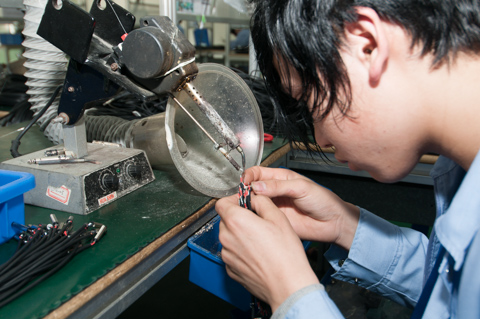
Manual Termination – Soldering
To support short-run manufacturing requirements, manual termination processes are used when appropriate. This approach helps meet customer quantity requirements while supporting lead-time objectives for lower-volume production.
Manual termination provides flexibility for applications that may not be suited for higher levels of automation while maintaining assembly quality and manufacturing responsiveness. Manual steps also help offset the increased setup costs and waste from high-volume automated assembly equipment.
Semi-Automated Termination
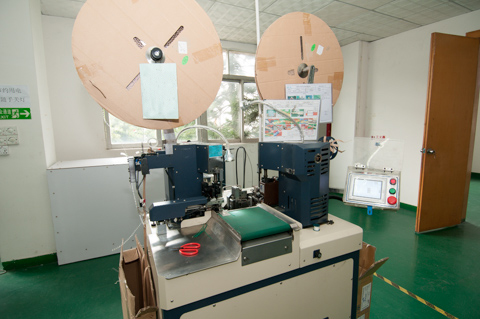
Automation is incorporated wherever practical to help control manufacturing costs and improve efficiency.
By utilizing automated equipment to the fullest extent possible, production processes can deliver consistent results while supporting cost-effective manufacturing across a broad range of cable assembly programs. Various types of machinery are capable of providing high-volume strip, cut, and tinning operations as well as automated crimp and soldering processes.
Connector Termination Capabilities
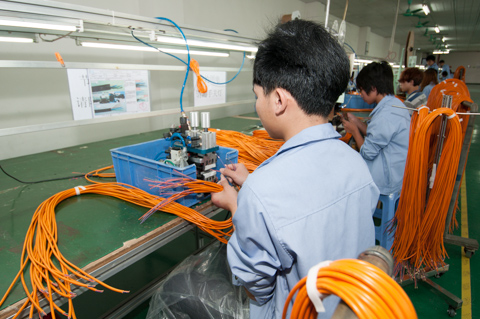
Epec works with major connector manufacturers and utilizes all manufacturers' recommended tooling to produce high-quality cable assembly terminations.
The integration of modern termination equipment into short-run manufacturing operations enables efficient production while maintaining quality and helping control costs.
IDC Termination and Custom Jumper Cable Manufacturing
Ribbon cable termination capabilities support a wide range of customer requirements.
Applications may include:
- UL-rated ribbon cable
- Custom NON-UL ribbon cable extrusions
- Custom color jackets and stripes
- Assemblies with 2 conductors to 100 conductors
- Standard and custom ribbon cable pitch spacing
- Additional requirements such as carrier films, markings, and shielding
- Available in bulk spools or as terminated assemblies
Our manufacturing teams have the experience required to terminate these cable types properly across a variety of custom configurations.
Overmolding – Multi-Cavity Capabilities
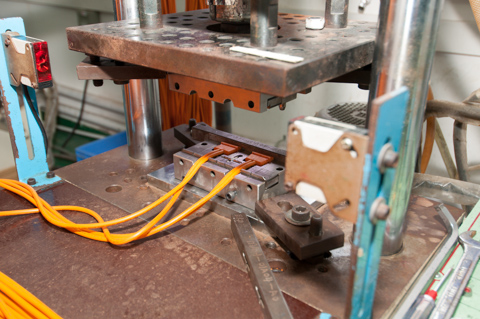
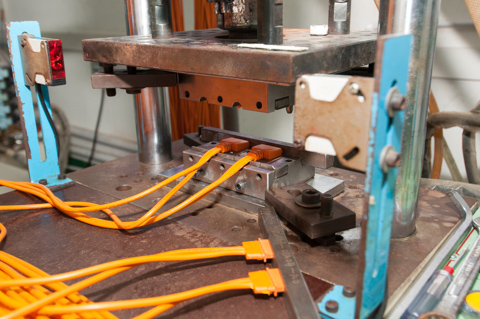
Overmolding solutions are designed to maximize manufacturing efficiency with a completely custom solution. Design engineers develop molds and overmold tooling that allow as many terminations as possible to be processed within a single mold shot. Higher complexity designs that incorporate components, PCBAs, and other hardware may require more sophisticated tooling designs that use both an inner and an outer overmold tool.
Efficient utilization of mold cavities helps reduce manufacturing costs while increasing throughput.
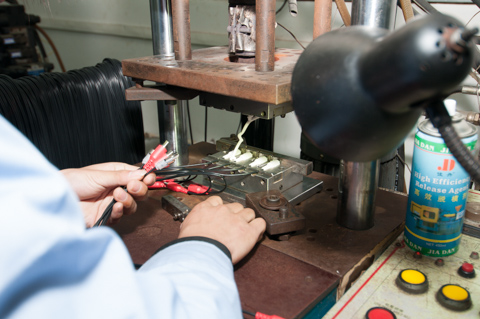
Overmolding – Custom Color Compounding
Overmold compounds can be matched to customer color requirements across a wide range of applications. Customers can specify Pantone colors or provide swatches or coupons to match so that production lots can be made to the exact desired color specifications.
Color matching is accomplished through equipment that measures color by wavelength. This process enables custom color development for overmolded products based on customer specifications.
This capability allows assemblies to align with equipment color schemes, branding, or support color-coding requirements for product identification and application-specific use.
Overmolding – Custom Designs
Custom mold designs can incorporate customer-specific branding and identification features. Depending on the exact requirements, customers can provide general guidance or a complete specification with vectorized artwork to include in the build.
Design engineering and tooling capabilities support molds that include:
- Customer or product names
- Logos
- Polarity markings
- Customer-supplied artwork
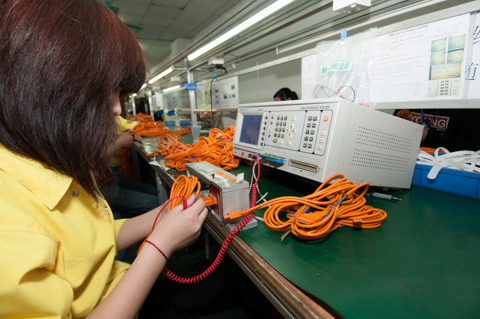
Quality Assurance – Electrical Testing
Every completed cable assembly is electrically tested for faults before delivery. Custom electrical test fixtures may be needed to support testing due to the pin count, connector type, and number of measurements needed.
Testing can include:
- Open-circuit detection
- Short-circuit detection
- Shield integrity verification
- Pin-out verification
- Dielectric withstanding voltage
- Insulation resistance
This testing process helps confirm that assemblies meet required electrical specifications prior to shipment.
Quality Assurance – Physical Analysis
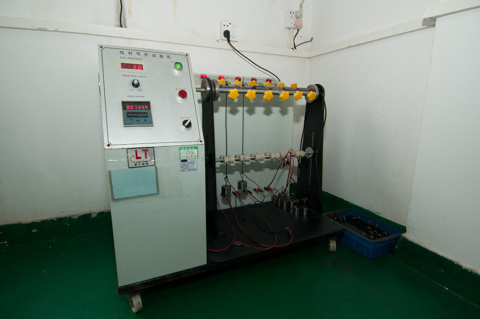
Cable assemblies are physically tested to verify their ability to meet demanding application requirements. Typical tests and measurements taken include a 100% inspection or an AQL check of critical dimensions. Key features to inspect include overall length measurements, the length of breakouts or taps, and a review of custom features like overmolds or injection-molded members.
Reliability remains a critical consideration, and physical testing is conducted to confirm assemblies will fit within the allotted space and can withstand the expected demands placed on them during use.
Quality Assurance – Environmental Analysis
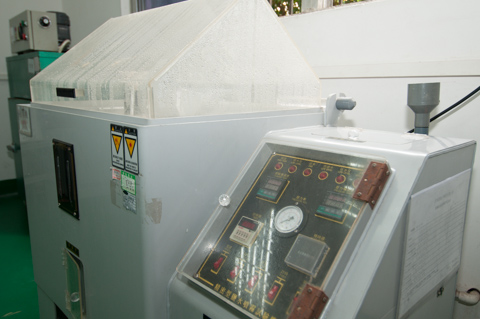
Many assemblies are intended for demanding operating environments. Environmental testing is performed to verify that products can withstand the anticipated conditions during their service life. Some cable assemblies are required to go through 100% thermal screening or temperature cycling, while others just need to survive testing during the initial qualification or validation tests.
This testing helps ensure assemblies perform as expected in their intended applications.
Supply Chain Management and In-House Inventory
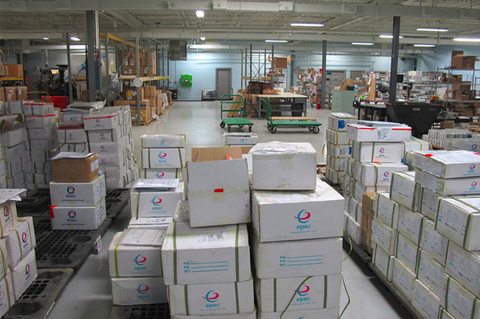
Manufacturing support extends beyond production to include supply chain management and inventory stocking services.
Capabilities include:
- Blanket and stocking agreements
- Managing supply chain logistics
- Kitting and specialty assembly considerations
- JIT (just in time) production and shipping products when needed
- Flexible stocking agreements from 6 months to 18 months depending on the circumstances
These services are intended to help customers maintain efficient operations and receive assemblies according to their production schedules.
Frequently Asked Questions
Quick Links
- What testing is performed on completed cable assemblies?
- What color matching capabilities are available?
- When would overmolding be used?
- What custom features can be incorporated into molded designs?
- What are the considerations for PVC ribbon cable assemblies?
What testing is performed on completed cable assemblies?
Every completed assembly undergoes electrical testing. Testing may include checks for opens, shorts, hipot, shield integrity, and correct pin-outs.
What color matching capabilities are available?
Color matching is available for overmolded products or custom wire jacket extrusions. Equipment that measures color by wavelength is used to develop custom colors based on customer requirements. Pantone color definition is among the most common ways to define color for overmolds and cable jackets.
When would overmolding be used?
Overmolding is used when custom strain relief, encapsulation, or connector designs warrant it. Epec designs tooling to process multiple terminations efficiently and can produce custom colors and custom molded designs with a variety of thermoplastic materials.
What custom features can be incorporated into molded designs?
Molds can be created with customer names, product names, logos, and customer-supplied artwork. Epec needs customer-supplied artwork to be provided in vectorized format to allow for the seamless transfer of digital information.
What are the considerations for PVC ribbon cable assemblies?
PVC ribbon cables are among the most common flat cable types supported for termination. Manufacturing capabilities support custom configurations across a range of conductor counts, wire AWG, and pitch spacings.
Need Help Manufacturing a Custom Cable Assembly?
Work with Epec's engineering and manufacturing teams to develop a cable assembly or wire harness solution tailored to your application requirements.
Request a Quote Request Design Support Request More InformationRequest a FREE Quote!
We are here to help create a cable assembly that will exceed your requirements.
Get Your Quote Now! Not Ready for a Quote? Request more info or email us your inquiry.